
by Sonia Romero
In the 2nd letter to Timothy chapter 1, Paul writes to his son in the Gospel, encouraging him to “Stir-up the gift within you (v.6).” In the Greek, stir-uptranslates to anazōpyrein, which literally means to “set on flame again.”1
Fire, in the Old and New Testament is not a new concept or phenomenon. God often uses fire as a symbol of His presence, refinement, judgement, sacrifice, guidance, and His Holy Spirit.
In his final letter, Paul with urgency in his tone, reminds Timothy that the gift, not spiritual gifts but the Holy Spirit, which was given to him by God, should never be quenched but it must be a fire that must keep burning.
As a first-generation Apostolic, I did not have the privilege of being brought up in a home that served God in the fullness of His truth. I was brought up in a Catholic home, raised on its values and sacraments. It wasn’t until my first encounter with Jesus my senior year of high school that would inevitably change the trajectory of my life. It was my very own “On the road to Damascus” encounter with Jesus. I happened to be in the right classroom at the right time when my now best friend, Jessica Llamas was leading a Bible study in our very own Sunnyside High School in Washington. As Jessica was leading the Bible study, I heard a voice that told me to stay.
At the time I didn’t know who the voice was from, but I knew that I had to trust it. Through months of faithful attendance to a life-group where I was receiving Bible studies, I soon attended my first service, and I instantly knew that I was exactly where I belonged. I was then baptized in the name of Jesus July 14, 2013, and I received the Holy Spirit one week later at our Washington state district youth camp.
As a newly born-again baptized young lady, ministry wasn’t something I sought after. I was learning what it meant to be a Christian and having a relationship with Christ. I was blessed to have a church family and friends who mentored and guided me through the early seasons of my spiritual formation. I then learned through various seasons of life that growth, maturity in Christ was essential to remain in Him. Jesus said in John 15:1, “I am the true (alethinos) vine…” Jesus could have said, “I am a vine” or “I am a vine,” but he wanted to communicate to His disciples He is the only vine that is legitimate. 2 Alethinos is a Greek word meaning “true, real, genuine.” Jesus as we know is the truth (John 14:6), and we that remain in Him are the branches. Without the vine, the branches cannot bear the fruit of the Spirit (John 15:5).
“We are all on a path toward spiritual transformation.”
Through a biblical examination of the Old and New Testaments, spiritual transformation is a central aspect of the Christian life. “Paul expects faith to begin to produce transformation.”3 Paul knew that being “formed” was not an arrival but a dynamic spiritual process that truly begins at our conversion. Paul’s own pivotal “Damascus Road experience” was fundamental to his spiritual transformation, but it was not complete until he was filled with the Holy Spirit.
To keep stirring up the gift within you, keeping that fire for Jesus burning, you must understand the process and the path that you are on and the power it takes to keep on burning.
We are all on a path toward spiritual transformation. Spiritual transformation is a spiritual process that can only be accomplished by and through the Spirit. This is the effective means by which a believer transitions from the bondage of the Law, the works of the flesh into the life of the Spirit.
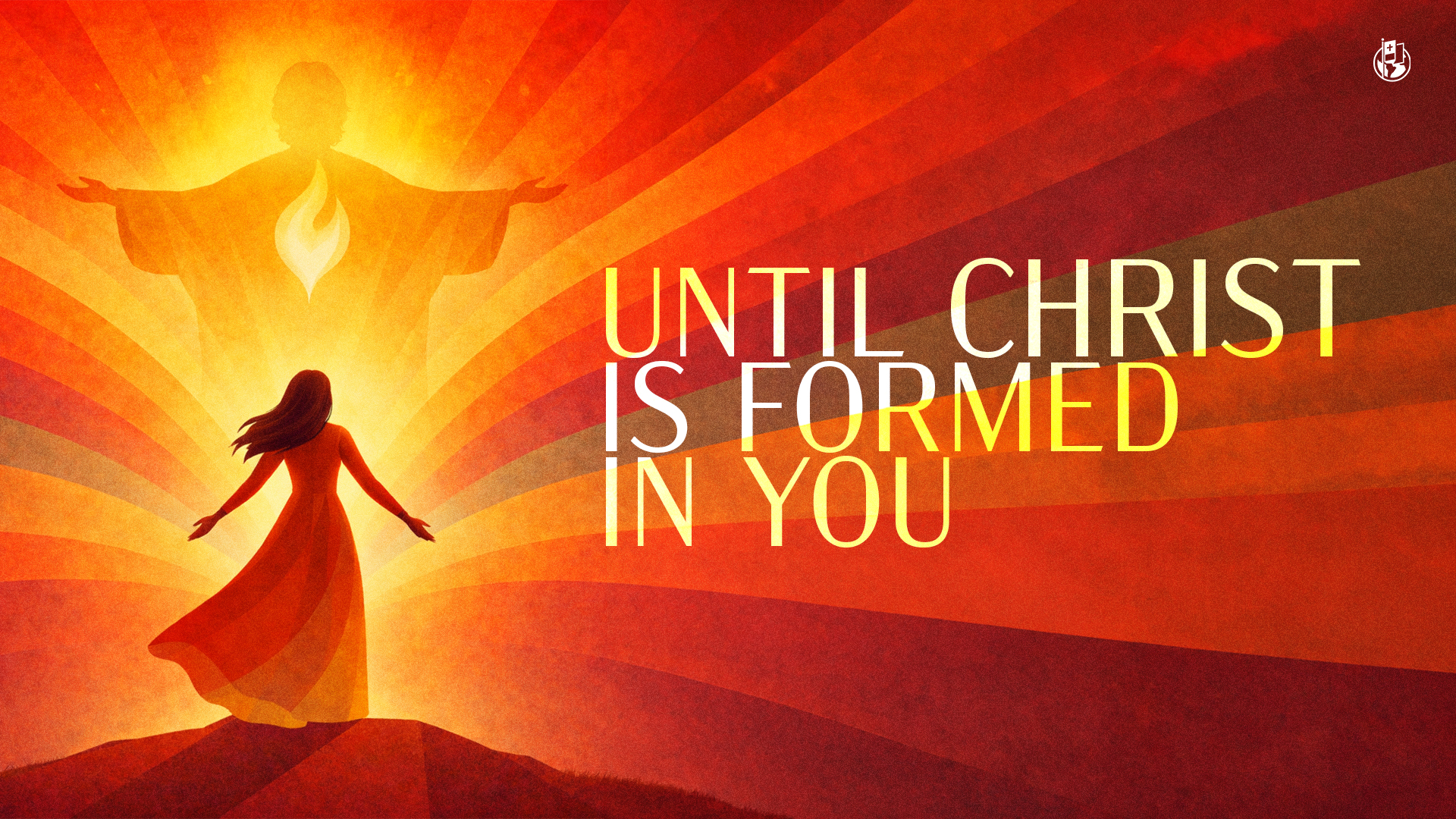
The Goal: Until Christ is formed in you (Gal. 4:19).
Understanding that the goal of spiritual transformation is to be formed into the likeness of Christ, then it is made clear: one must live, respond, and behave like Jesus. We must learn to “Walk in the Spirit” (Gal. 5:16). To ‘walk in the Spirit’ is to operate under the mind of Christ, which the Holy Spirit imparts, “For who has known the mind of the LORD that he may instruct Him?” But we have the mind of Christ” (1 Cor. 2:16). This spiritual understanding empowers believers to live a transformed life, not ruled by the flesh but by His Spirit. As one interpreter notes, “In 5:16-25, Paul emphasizes here that the solution to the passions of the flesh is not more laws, but the Spirit who transforms from within.”4 Ultimately, the Holy Spirit is the sole agent of transformation.
As I glean to and from the beginning of my spiritual transformation, it has been an active force into my current areas of ministry, education, and continual pursuit as a student at the Urshan Graduate School of Theology. I continue to keep my passion and fire for God ablaze through the confidence I find in God, His Word, and Spirit. Philippians 1:6 says, “Being confident of this very thing, that He who begun a good work in you will complete it until the day of Jesus Christ.”
I encourage you to keep fanning the flame. Stir-up the gift that is within you by walking in the Spirit and set the world on fire.
1Luke Timothy Johnson, “Paul as a Model of Patient Suffering (1:6–14),” in The First and Second Letters to Timothy, AYB 35A (New Haven: Yale University Press, 2001), 350.
2 Thomas E. Trask and Wayde I. Goodall, The Fruit of the Spirit (Grand Rapids: Zondervan, 2000), xv.
3 M. Robert Mulholland Jr., Shaped by the Word: The Power of Scripture in Spiritual Formation (Grand Rapids, MI: Zondervan, 1985), 129.
4 Craig S. Keener, “Commentary,” in Galatians, New Cambridge Bible Commentary (Cambridge: Cambridge University Press, 2018),119.
About the Author
 Sonia Romero is a first-generation Apostolic who has faithfully served the Lord for over a decade and currently serves as a youth teacher, media team member, and life-group leader at New Hope Church in Sunnyside, WA. Building on her professional background in education, she holds a Bachelor’s Degree in Education and a Master’s Degree in Curriculum and Instruction. She is now furthering her ministerial education by pursuing a second master’s degree at the Urshan Graduate School of Theology.